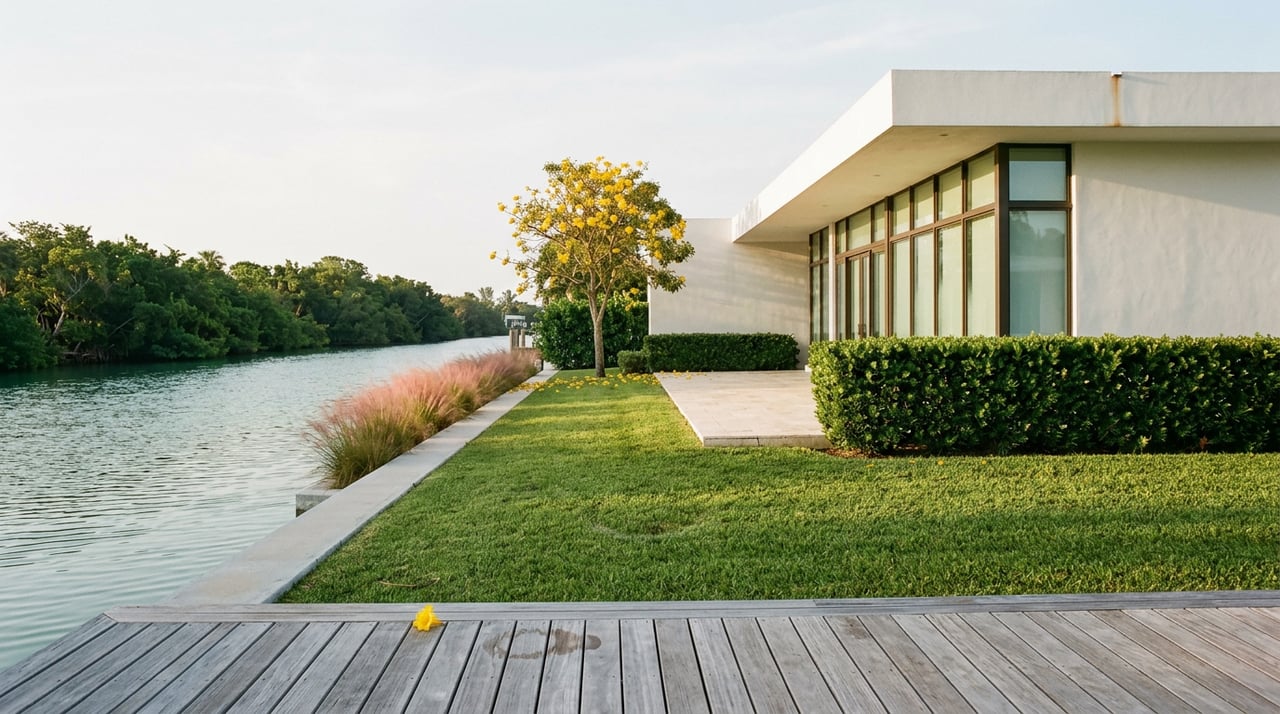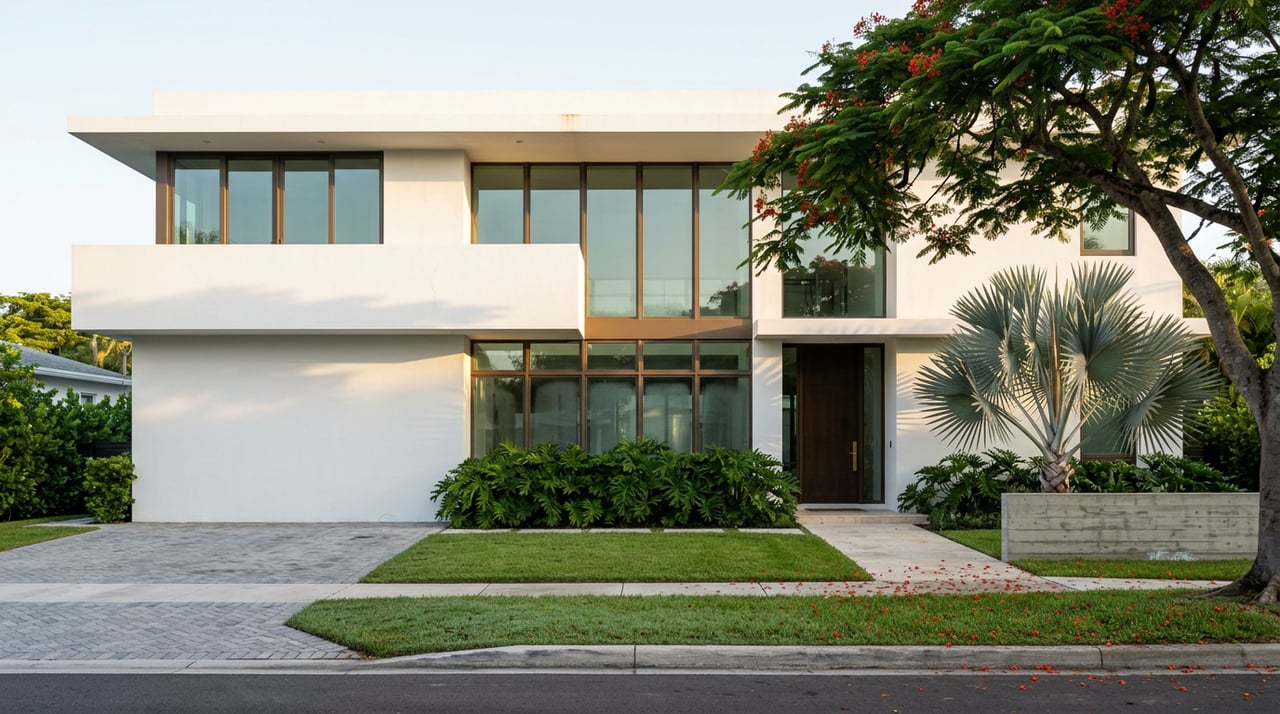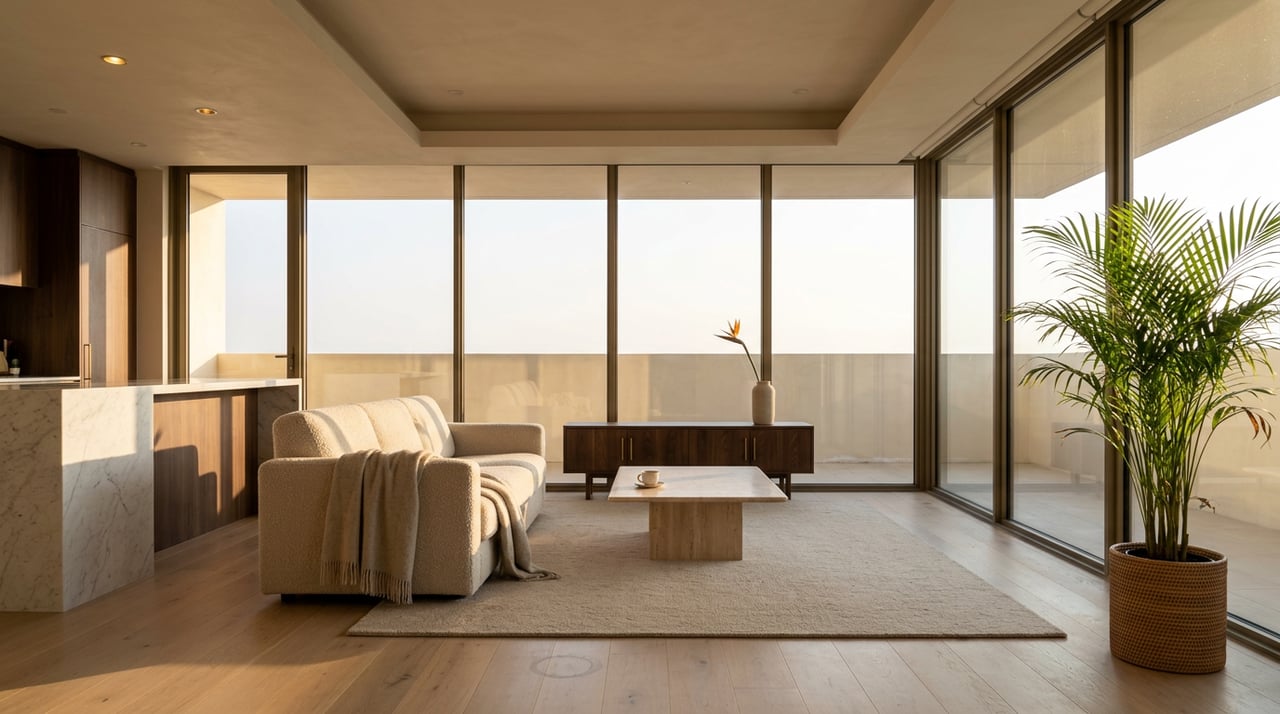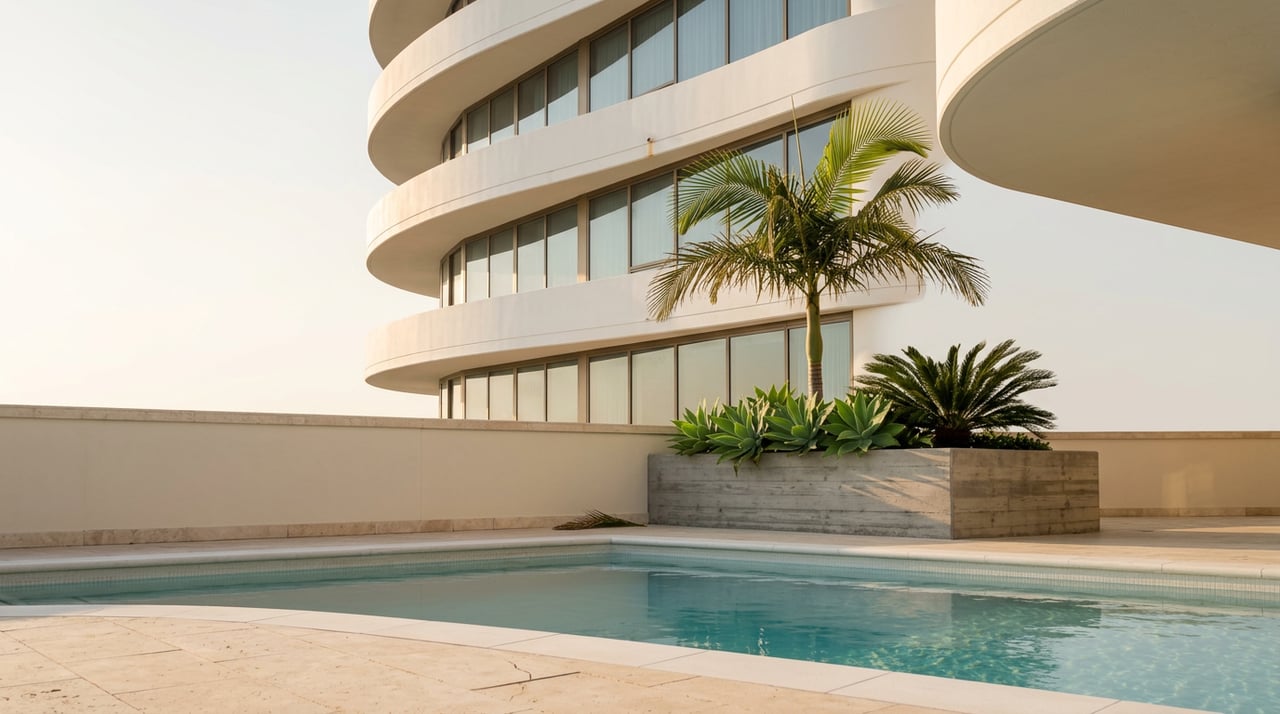
A buyer touring Bal Harbour this past June walked into the Rivage sales gallery at 10245 Collins Avenue, looked at sky villas quoted near $3,925 a square foot, then drove eight blocks south the same afternoon to see a two-bedroom resale at Balmoral listed around $1,050 a square foot. Both units were marketed as Bal Harbour oceanfront condominiums. Neither the brochure language nor the MLS remarks explained why one number was nearly four times the other.
The honest answer has almost nothing to do with the ocean. It has to do with concrete, reserve funds, and a Florida law written in direct response to the collapse that gives this stretch of coastline its name in real estate circles for reasons no one wants repeated.
One Median, Three Economies
Bal Harbour's town-wide condo median gets quoted as if it describes a single market. As of early August 2026, Oceana Bal Harbour alone shows roughly 13 active listings with a median asking price near $5.8 million, or about $2,700 a square foot, while its trailing 180-day closings landed near $7,562,500, or about $2,701 a square foot, with an average days-on-market near 216. A separate analysis of the wider corridor in late June 2026 put Oceana's trailing 12-month average closer to $2,561 a square foot across 15 all-cash sales averaging $8.67 million, while St. Regis Bal Harbour, delivered in 2011, closed around $2,166 a square foot over the same window, with more than two dozen active listings against only a handful of trailing sales.
Now put those figures next to the town's older oceanfront stock. Reporting from July 2026 tracked Bal Harbour Tower, built in 1990, closing near $1,020 a square foot over the prior 180 days with days-on-market averaging above 200. Harbour House, from 1964, priced closer to $950 a square foot over the same window. Balmoral, from 1977, sat at roughly $1,050 a square foot and had been on market past 180 days.
A late-June 2026 read on the combined Surfside and Bal Harbour luxury condo corridor put average inventory at roughly 15 months and average closing price near $1,837 a square foot, with a typical unit sitting on market around 200 days. That blended number is real, but averaging a $950-a-foot resale with a $3,925-a-foot preconstruction sky villa tells you nothing useful about either one. You are not looking at one market with some scatter. You are looking at three markets that happen to share a zip code.
The Variable That Isn't in the MLS Remarks
The towers doing the heavy lifting on the low end of that range, Harbour House, Balmoral, The Tiffany, Bal Harbour Tower, and The Palace, were built between 1964 and 1994. None of them are distressed. They are structurally sound, professionally managed, oceanfront addresses that happen to sit squarely inside the age window Florida singled out after the Champlain Towers South collapse in Surfside.
Senate Bill 4-D, passed in a special session in May 2022, created the state's first mandatory milestone inspection regime for condominium and cooperative buildings three stories or taller, generally triggered at 30 years after the certificate of occupancy, or 25 years for buildings within three miles of the coast at a local jurisdiction's discretion. Senate Bill 154, passed in 2023, specified the eight components a Structural Integrity Reserve Study must cover: roof, load-bearing walls, foundation, fire protection, plumbing, electrical, waterproofing, and windows and exterior doors. Florida Statute 718.112(2)(g) now bans associations from voting to waive or reduce reserve funding for those eight items on any budget adopted after December 31, 2024, and full funding on that schedule became mandatory starting January 1, 2026. You can review the current inspection and SIRS framework directly on the Florida DBPR's condominium resources page.
House Bill 913, signed by Governor DeSantis on June 23, 2025 and effective July 1, 2025, gave associations more room on timing, most notably allowing a SIRS to be completed alongside a milestone inspection due by December 31, 2026 rather than separately. It also let boards pause reserve contributions for up to two budget years after a milestone inspection to redirect cash toward urgent repairs the inspection uncovers. What it did not do is remove the underlying obligation. For a 2026 buyer reading an association's document package, the question isn't whether the building got an extension. It's what the board has done with it: is there a current SIRS, a specific funding trajectory, and evidence of actual contributions in recent financials, or neither.
What a Six-Figure Assessment Actually Buys
Across 1975-to-1995 vintage buildings in Miami-Dade County, 2026 special assessments tied to this reset are commonly landing between $30,000 and $75,000 per unit, and climbing above $100,000 per unit when roof, concrete, and waterproofing scopes are combined into a single project. That is the arithmetic sitting underneath Balmoral's $1,050-a-foot asking price and Harbour House's $950. The discount buyers are seeing at the older towers isn't a bargain in the ordinary sense. It's the market pricing in an assessment that hasn't landed yet, or has landed and isn't fully disclosed in the listing.
There's a financing consequence too. Roughly 5,000 condos statewide sit on Fannie Mae's unavailable list as buildings without completed inspections or adequate reserves, up from a few hundred before 2021, with 696 of those buildings across Miami-Dade, Broward, and Palm Beach counties specifically. A building on that list narrows the buyer pool to cash purchasers, which itself depresses the price further, independent of the building's actual physical condition.
Rivage, by contrast, is delivering under the current law from the start rather than retrofitting an older reserve structure to meet it. The 24-story tower, designed by CFE Architects with Skidmore, Owings and Merrill, sits on what its developers describe as the last undeveloped oceanfront parcel in Bal Harbour, with 56 to 61 residences ranging from roughly 3,300 to 13,000 square feet and pricing that has run from around $8 million into the tens of millions, with penthouse pricing reported as high as $67.5 million. You can see current floor plans and pricing directly on the official Rivage Bal Harbour site. A buyer there is paying for warrantability and a funded reserve on day one. A buyer at a 1980s tower is paying less per foot but underwriting a structural and financial unknown that the seller, not the buyer, was supposed to have managed.
Before You Write the Offer
On any Bal Harbour building older than 20 years, request these documents before the inspection period closes, not after:
- The most recent Structural Integrity Reserve Study and its funding schedule
- The milestone inspection report, including any Phase 2 findings and the 365-day repair clock those findings trigger
- The two most recent annual budgets and reserve schedules, with the current reserve balance shown line by line
- Twenty-four months of board and membership meeting minutes, where reserve transfers, waivers, and pending assessments actually get recorded
- The master insurance declarations page, including wind and flood coverage limits and deductibles
If a seller can't produce this within about five business days of the request, treat that delay as information, not a paperwork problem. The single most useful comparison in the whole file is simple: does the current-year budget line for reserves match what the SIRS says the association should be contributing? When those two numbers line up, the building is on schedule. When they diverge, an assessment is being deferred, not avoided.
How Sellers Clear the Number at Closing
A pending special assessment doesn't have to kill a deal. In Miami resale transactions in 2026, it's standard for a seller to pay the outstanding balance in full at or before closing so the buyer takes title clear of it, or for the two sides to negotiate a straightforward price reduction equal to the assessment amount. Either approach works. What matters is knowing the exact number before the inspection period ends, since it changes the offer price either way.
Miami-Dade County has also flagged that its Condominium Special Assessment Program is expected to reopen in early 2026, offering loans up to $50,000 with a 40-year term to owners under 140 percent of area median income who are facing these mandatory safety costs. That program is aimed at owner-occupants managing an assessment, not at buyers structuring an offer, but it's worth knowing about if you're advising a seller who's carrying one.
The Buyer's Market Claim Doesn't Apply Evenly
MIAMI REALTORS' chief economist has projected a broad buyer's market through mid-2026 for South Florida condos generally. In Bal Harbour, that framing holds for the mid-tier resale stack, where inventory has stretched into marketing windows above 150 days. It does not hold for the delivered trophy towers or for Rivage's remaining allocations, where scarcity, not softness, is setting the price. Treating the whole town as one buyer's market, or one seller's market, misreads both ends of it.
A Few Direct Questions
Does a lower price per square foot at an older tower mean it's a better deal? Not by itself. It might mean the building has already funded its reserves and simply carries a longer marketing window, or it might mean an assessment is coming that hasn't been priced into the listing yet. The SIRS and the meeting minutes tell you which.
Can I still get financing on a building with a pending milestone repair? It depends on the building's status with lenders and whether it appears on any conventional financing restriction list. This is a document you request early, not something to discover during underwriting.
Is new construction automatically the safer purchase? It's the more predictable one on reserve funding, since a building like Rivage starts under the current law rather than adjusting to it. Predictability and value are different things, and the trophy tier is pricing that predictability at a real premium.
Reading a Bal Harbour listing accurately in 2026 means treating the price per square foot as a starting question, not an answer. The building's age, its SIRS status, and its reserve trajectory explain more about what you're actually paying for than any view or lobby finish ever will.
If you're comparing buildings in Bal Harbour and want a second set of eyes on what a specific tower's reserve position actually means for your offer, Allen Davoudpour and his team work this corridor building by building. Schedule a Consultation to talk through the specific towers on your list before you write anything.